County contact
Etowah County Probate Office — Licensing
Mailing: P.O. Box 187, Gadsden, AL 35902
Physical: 800 Forrest Avenue, Suite 122, Gadsden, AL 35901
Phone: 256-549-5342
Website: etowahcounty.org — Probate Office
Check before you travel: Etowah County Probate publishes office closure notices on its website. Verify hours at etowahcounty.org before making the trip to Gadsden.
Etowah County specifics
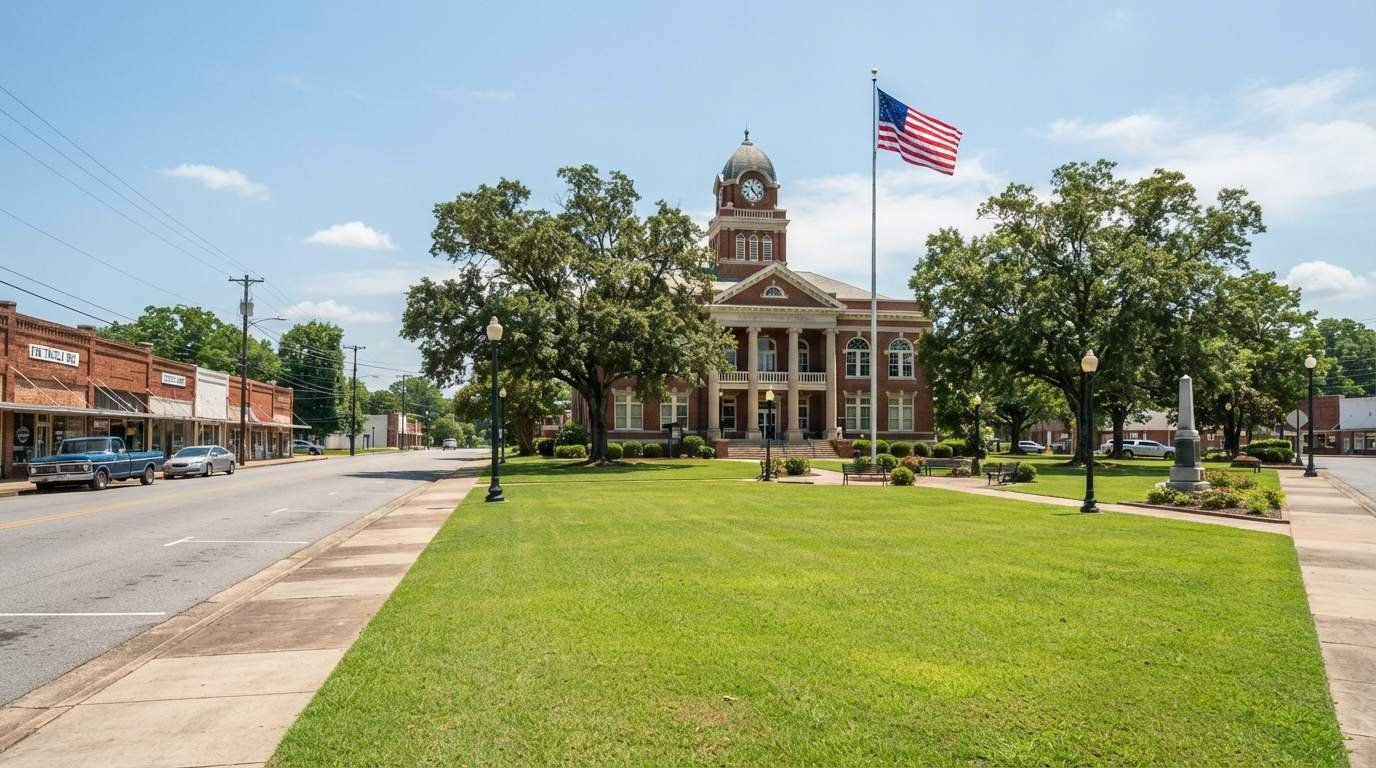
Etowah County's seat is Gadsden, the county's largest city. The Probate Office at 800 Forrest Avenue handles business licensing — call 256-549-5342 ahead of filing to confirm your classification and the amount due. No complete fee schedule is published online.
Boaz — the county-line caution
Boaz spans Etowah and Marshall counties. Your physical address determines your county. A business operating across the city or conducting work on both sides of the line may need licenses in both Etowah County (256-549-5342) and Marshall County (256-571-7764). Confirm your county before filing.
The Gadsden–Albertville–Boaz corridor
Etowah and Marshall counties share a border, and the Gadsden–Albertville–Boaz corridor is one of the more active small business areas in North Alabama. Businesses serving this region routinely operate across the county line. If your service area crosses it, plan for two county licenses rather than discovering the second obligation later.
Adjacent counties
Etowah borders Marshall, DeKalb, Cherokee, Calhoun, St. Clair, and Blount counties. Contractors and mobile service businesses covering Northeast Alabama may need licenses in several of these. A license is required in every county where business is conducted — not just where the business is based.
Principal municipalities
Gadsden, Rainbow City, Attalla, Southside, Glencoe, Hokes Bluff, Boaz (partial — see above), Sardis City, Altoona, Reece City, Ridgeville, and Walnut Grove all issue municipal licenses separately from the county. Contact each city's clerk or license office directly.
The two-license rule — what every business must know
Alabama requires a business privilege license in every county where business is conducted — not just where you are based. That obligation runs under Title 40, Chapter 12, Code of Alabama 1975 and is enforced by the county Probate Judge or License Commissioner. It is separate from, and in addition to, any city or municipal license.
The rule most businesses get wrong: A city business license does NOT replace the county license. If you are inside city limits, you almost certainly need both — the state/county license through the Probate Office and a separate municipal license through the city. These are different agencies, different fee schedules, and sometimes different deadlines.
| License type | Issued by | Covers |
|---|---|---|
| State & county privilege license | County Probate Judge or License Commissioner | State and county requirement under Title 40, Ch. 12 |
| Municipal business license | The city or town | Operating inside that city's limits — and often its police jurisdiction |
License year and renewal deadlines
| Date | What happens |
|---|---|
| October 1 | New license year begins |
| October 31 | Renewal deadline — pay by this date to avoid penalties |
| November 1 | Renewals become delinquent |
| Before opening | New businesses must obtain the license BEFORE operations begin — no grace period |
| Oct 1 – Dec 31 | Business personal property must be listed with the county Revenue Commissioner |